Something to Ponder...

The Scripture in Revelation 3:14-22 has been coming to my mind a lot recently, especially verses 15 & 16. It talks about us being lukewarm, in other words serving two masters, the Kingdom or the world. If we are lukewarm, that means we want the best of both worlds. We want the best of the Kingdom, and we want the best of the world. But God is very clear in this passage, and others, that it’s all or nothing - we either serve Him as Master, or we choose the master of the world. Yet as Christians, I wonder if we’ve truly learnt the implications of ‘sitting on the fence’. We want to straddle the Kingdom and the world and hope that God won’t notice. Here’s a picture that God showed me - the wall between our neighbour and ourselves on the driveway is low. That’s how most of us perceive that picture of straddling the Kingdom and the world. (Left Picture). But if we move to the wall between the street and the house (Right Picture) – it’s higher, a little more difficult to straddle. So if we look at the pavement as the Kingdom and the bushes and roses as the world, we see the entanglements and the thorns that harm us as we try and live in the world and enjoy the things of the world more than the ways of the Kingdom. Yet the pavement represents the ‘Highway of Holiness’ – it’s not always a smooth way, but it’s the only way. From First15 Devotional 17 May 2026 - “Complexity enters into our lives as soon as we try and juggle living for the world and living for God. There is a fence between this world and God’s Kingdom too high to straddle. It is impossible to put one foot in God’s Kingdom while keeping a foot in the world. You cannot have both love for the world and love for your heavenly Father. This world is at enmity with God (James 4:4). It is set against him and his ways. But you and I have been given a choice by the powerful sacrifice of Jesus. We’ve been given a real, available option to serve and love the eternal, Almighty God. It’s time for the Bride of Christ to end its affair with the world. It’s time for us to let God love us and in response live for Him alone.” We are reminded that we are in the world but not of the world. We’ve been created to transform the world around us, not be shaped by the world. We cannot love God and love the ways of the world in equal measure. We cannot be in friendship with the world if we want to be called friends of God. We have to determine what’s in our hearts and who or what we will be beholden to when we make our choice about who we are serving and where our desires lie. We cannot serve two masters. We cannot be lukewarm. Too often, we have not exhibited a lifestyle of being fully satisfied in God and His plans. We exhibit a lukewarm faith where we neither experience the fullness of God or what the world has to offer. As a result, our lives are lived without passion, joy, or abundance in any form. Sometimes for Christians the dilemma arises about who we are to obey when it comes to the things of the world, and especially the laws of the land. The Bible says in Matthew 22:21, Mark 12:17, and Luke 20:25 that we are to give to Caesar what’s due to him, and God what due to Him. Whilst our first priority is to give everything to God, I believe that in this verse, Jesus encourages us that we must be obedient to the laws of the land. We need to let the ways of the Kingdom shape how we honour these things. We must obey the law, and we must pay our taxes and dues. We need money to live, so earn that money honestly. But don’t let money or the job/way of earning that money become the master. It becomes the master when we think about money more than we think about God. It becomes the master when we pursue riches rather than pursue the Kingdom. The same applies to all the things of the world that we chase after. Scripture is very clear that we should fix our eyes on God – Matthew 6:24 urges us to worship the true God and not be enslaved by money. Colossians 3:14-17 reminds us that the Word of Christ must dwell in us richly and flood us with wisdom. That every activity of our lives should be drenched with the beauty of Jesus. 1 John 2:15-17 is the warning that we are not to love the world or the things of the world because the things of God and the things of the world are incompatible. The desire to be in the world leaves God out of the picture, or at least at a lower rung in the equation. Hebrews 12:1-3 reminds us why we need to serve the Lord as our King and Master – that way we will run the race set before us and we won’t become worn down or cave in to life’s pressures. God has a plan and a destiny for us, and as we keep seeking the Kingdom of God, as we keep gazing upon His beauty, as we continue to praise God in the beauty of His holiness, then we will know that we are on the path set before us, serving only God and the Kingdom. I encourage you to consider whether you are indeed serving two masters. Or maybe you are a lukewarm Christian. And if you are, then simply confess and repent and choose to serve the Only Master who is worthy of being served – God. Live for the Kingdom and bring Heaven to earth every day. Blessings Jean If you were blessed by this article, please do share it with others

The two difficult aspects of entitlement that hold back forgiveness are the sense of having been wronged or robbed and the demeaning or lessening of who I am, i.e., my identity. Both could have been real, valid, deeply painful experiences, so much so that they will bear a profound harvest of evil in our lives should we choose to file them away (denial) or, worse, nurture the desire for justice and fairness. One might ask, “Why do you start a blog in such a confrontational sense?” And the reason is that most of us have heard this subject preached over and over again from different perspectives. The philosophical and fundamental truth concerning this issue in your lives is your ability to rule and reign in your creation. First and foremost, you are a king of the earth, and your free will is inherently bestowed upon you at birth. That included the willingness to forgive and to let go of all people and circumstances that cost you, that caused you loss, people who have robbed you of what inherently belonged to you. On every level – spiritually, emotionally, physically, materially, financially. Whether it is abuse, oppression, deception, intimidation, control, avoidance, neglect, or abandonment, to name but a few. And the scars of such insults and hurts, even regrets, can haunt us consciously or manifest unconsciously. We can even become jealous and, worse, envious of those who did not have to go through what we did. And dormant pain and a torn identity will inevitably manifest when one is put under great strain or pressure, or suffers intense trials and tribulations. So, when Jesus teaches us to forgive in Matthew 18:21-35 , we initially read, “Then Peter came up and said to him, ‘Lord, how often will my brother sin against me, and I forgive him? ‘As many as seven times?’ Jesus said to him, ‘I do not say to you seven times, but seventy-seven times. Therefore, the kingdom of heaven may be compared to a king who wished to settle accounts with his servants …’ [And it ends with] ‘So also my heavenly Father will do to every one of you, if you do not forgive your brother from your heart.’” Also regard this in the light of Mark 11:24-25 , “Therefore I tell you, whatever you ask in prayer, believe that you have received it, and it will be yours. And whenever you stand praying, forgive, if you have anything against anyone, so that your Father also who is in heaven may forgive you your trespasses.” Most Christians accept the principle of “the need to forgive”. However, in practice, we still see too many Christians in pain because of these traumas and wrongdoings in their lives. There was a time when the Church tried to enable the process by saying, “Even if you are struggling to forgive, just declare your willingness to do so to the Lord.” Our puny efforts do not limit the Lord, and I am sure there are those whom the Lord met more than halfway. But as an issue exposed in absolute truth, it will not hold up as a corporate guideline. Jesus supplied the process perfectly. Would you like to live a life free of owing God anything, still empowered (as the servant was), yet able to release the debts still owed to Him? The saying remains, unforgiveness is like taking poison, believing it will kill the one who is indebted to you. Irony is, as we know, when you do not forgive a brother or sister in Christ, how is that going to pan out for you in the eternal sense now? Unforgiveness is part of the process Paul talks about to the Galatians, and those who practice holding on to unforgiveness will not inherit the kingdom of God, and that refers to “now”. It is therefore imperative (a must) that we confront our own debt in the face of eternal judgment. We will all stand before the judgment seat of Christ (God), and we will most certainly have to give an account of what we have done in our bodies, both good and evil. Salvation does not guarantee a mighty reward in Christ; Paul taught this in 1 Corinthians 3:15: “If anyone’s work is burned up, he will suffer loss, though he himself will be saved, but only as through fire.” And what lies beyond for such a person? Consider it: if your prayers are hindered and/or disregarded because there is still unforgiveness in your heart, why would everything be hunky-dory after the Day of the Lord? And then Jesus made it clear, in your daily worship, when you are aware of a pressing issue with someone, leave your sacrifice there at the altar, i.e., the place where you come into the Presence of God. If at all possible, as Holy Spirit leads, go and be reconciled to that person. Then come and offer your sacrifice to God. This is not always possible in the natural world. Sometimes those who have caused you harm or suffering need to be released, verbally, from your heart, with an understanding of the cost to yourself if you don’t—but also understanding the truth that when you stop passively playing God, you allow the Holy Spirit the opportunity to start operating in their lives. So how do you do it? Remember from whence you have fallen! Get back into the “first love” and realize that you were released from a multitude of sin by Jesus (remember the servant was shown grace by his Master first), then appreciate the full impact of such a release in the eternal sense. Verbally choose to release every person that has wronged you into Jesus’ hands, expunge the book you kept, and hand it over to Him. It might help at times to gain God’s perspective on how He sees you or to understand where He was when it seemed that you were abandoned in your suffering. Ask Jesus to forgive you for harboring unforgiveness and actively receive the substance of His forgiveness, and then break the agreement with the enemy and forbid them from trying to reinforce the old pattern in your life. Not forgiving is not a Christian option, but understanding grace and mercy to their full extent makes the process possible. And once you’ve done it with sincerity, you will most certainly say, “Why have I not done this a long time ago?” In closing, one of the greatest barriers to forgiveness is the feeling that someone has deeply hurt us or taken something precious from us. Sometimes the pain goes even deeper, leaving us feeling less valued, less secure, or even questioning who we are. These wounds are often very real and can cut deeply. God never asks us to pretend they didn't happen. But when we hide our pain or cling tightly to the hope that life will one day feel completely fair, those wounds can quietly take root in our hearts and continue to shape our lives. The Lord gently invites us to bring our hurt into His presence, where His love can heal what has been broken, and His grace can lead us toward the freedom that forgiveness brings. Blessings in the name of our Lord Jesus Christ. Ben Our thanks to Ben for this month’s Blog contribution If you were blessed by this article, please do share it with others
In the spiritual realm, not everything that feels like the Spirit is the Holy Spirit. There is a counterfeit that masquerades as the Holy Ghost — a deceptive presence that often mimics the genuine work of God. But God’s people are called to discern the difference between true and false moves of the Spirit. Let’s dive deep into the seven dangerous ways the enemy mimics the Holy Spirit and how to protect yourself from these traps. 1. False Peace that does not Lead to Conviction. Romans 8:6 (KJV):"For to be carnally minded is death; but to be spiritually minded is life and peace." The Holy Spirit brings peace that leads to conviction, transformation, and alignment with God’s will. However, the enemy offers a peace that avoids conviction, lulling the believer into complacency and a false sense of security. Danger : The enemy’s false peace will lead you to believe everything is fine when your heart is far from God. Truth : True peace — the peace of the Holy Spirit—always accompanies repentance and spiritual growth. It doesn’t soothe sin; it convicts and calls for change. 2. Counterfeit Gifts that lead to Pride and Self-Exaltation 1 Corinthians 12:4-7 (KJV): "Now there are diversities of gifts, but the same Spirit... But the manifestation of the Spirit is given to every man to profit withal." The Holy Spirit’s gifts are given to edify the body of Christ and bring glory to God. However, the enemy will counterfeit these gifts, often using them to inflate the ego, exalt the individual, and draw attention away from Christ. Danger : When gifts of the Spirit lead to pride, self-promotion, and a lack of humility, you can be sure the enemy is behind it. Truth : The Holy Spirit exalts Christ, not the vessel. The true gifts of the Spirit never lead to pride—they always lead to humility and service. 3. Deceptive Signs and Wonders Matthew 24:24 (KJV): "For there shall arise false Christs and false prophets, and shall shew great signs and wonders; insomuch that, if it were possible, they shall deceive the very elect." The enemy can perform signs and wonders to deceive and manipulate. False prophets may use powerful displays of supernatural activity to draw people into error and mislead them. Danger : Not every miracle is from God. The Bible warns that false prophets will perform great signs and wonders. These signs are designed to distract from the true Gospel and lead people into deception. Truth : True signs and wonders always point to Jesus and the truth of His Word. 4. Counterfeit Prophetic Voices that lead to Fear and Confusion 1 John 4:1 (KJV): "Beloved, believe not every spirit, but try the spirits whether they are of God: because many false prophets are gone out into the world." The Holy Spirit speaks with clarity, conviction, and direction — leading us into truth and peace. However, the enemy will mimic prophetic voices that create fear, confusion, or division. Danger : If a prophecy leads to instability, fear without hope, or division, then it is not the Holy Spirit speaking. Truth : The true voice of God always leads to peace and unity in Christ. True prophecy edifies the Church, brings comfort, and builds faith, not fear. 5. False Conviction that leads to Condemnation Romans 8:1 (KJV):"There is therefore now no condemnation to them which are in Christ Jesus, who walk not after the flesh, but after the Spirit." The Holy Spirit convicts, but He never condemns. While conviction leads to repentance, restoration, and freedom, the enemy’s counterfeit brings guilt and condemnation that drives the believer further away from God. Danger : If your conviction leads you to self-hate, shame, or separation from God, it is not the Holy Spirit. Truth : The Holy Spirit always calls you back to the Father with open arms. True conviction leads to restoration, not rejection. 6. Mimicked Spiritual Fruit that Lacks Love and Holiness Galatians 5:22-23 (KJV):"But the fruit of the Spirit is love, joy, peace, longsuffering, gentleness, goodness, faith, meekness, temperance..." The enemy can mimic outward acts of spirituality, like kindness or generosity, but it lacks the root of love and holiness. The counterfeit is shallow, motivated by pride, fear of man, or a desire for recognition, not genuine love for God and others. Danger : The enemy’s counterfeit always seeks external validation, not internal transformation. Truth : The true fruit of the Holy Spirit is produced in the secret place, where your motives are tested and refined by God. True spiritual fruit is always rooted in God’s love and leads to holiness and godliness. 7. Spiritual Sensations that Do Not lead to Obedience James 1:22 (KJV): "But be ye doers of the word, and not hearers only, deceiving your own selves." The enemy will stir up emotional experiences that feel like the Spirit, but they do not lead to obedience to God’s Word. It’s easy to mistake emotional highs for the genuine move of the Spirit. But the Holy Spirit always calls you to obedience, not just emotional experiences. Danger : If your “spiritual experience” does not lead to obedience in your everyday life, it is not from the Holy Spirit. Truth : The Holy Spirit empowers action, not just feeling. True encounters with God empower us to live out His Word and walk in holiness. SPIRITUAL DISCERNMENT IS KEY In all of these areas, discernment is the key. God has called us to walk by the Spirit and not by the flesh. But we must recognize the counterfeits that try to deceive us. The Holy Spirit never mimics. He is always authentic, pure, and holy. John 16:13 (KJV): "Howbeit when he, the Spirit of truth, is come, he will guide you into all truth..." When we are filled with the true Holy Spirit, He guides us into truth, enabling us to recognize the false and hold fast to what is real. May we be alert, discerning, and anchored in God’s Word, so we don’t fall for the enemy’s tactics. Let this word of wisdom stir you to greater discernment and deeper commitment to the true Holy Spirit. Blessings Toby Dr Marishjean Paton Dr.Div PhD Melqowsh Ministries and Melqowsh Bible College Our thanks to Toby for this month’s Blog contribution If you were blessed by this article, please do share it with others
Proverbs 13:12, “Hope deferred makes the heart sick, but a dream fulfilled is a tree of life.” We will all experience disappointment at times in our lives. There are a few thoughts I would like to share on the subject, and truth be told, one could write a book, if not books, on Christian disappointment. So, how do we define disappointment? Disappointment is the feeling of loss, sadness and/or dissatisfaction that arises when dreams, hopes or expectations are not fulfilled. The process of cultivating faith starts with a vision, a word, a spiritual seed, as the Scripture indicates. The seed leaves one with an expectation, because the promise remains, “Trees bearing fruit with seed in them, according to their kind.” (Genesis 1:12) The seed then takes substance and grows into hope. And hope in the Christian sense is the sure and confident expectation or anticipation of receiving what God has promised us in the future, and it is always positive in its final outcome (Jeremiah 29:11). Hope then materialises as we exercise faith, trusting completely in the Lord as the one who will bring the vision, dream, or word to fulfilment. And therein lie most of the issues. The take-home crucial point is: “Don’t fight the battles God did not call you to fight.” So, the key is the adage: “Prevention is better than cure”. First question would be, “Is my dream my own, the expectations of others or that of the world?” We live in a postmodernist society that will test us on every side, and it would be useful to remember that we must live in an authentic, loving, dynamic relationship with the Holy Spirit continuously in dialogue, watchful and prayerful all the time. Then we must realise that every decision is made from a position of faith, fear or past experiences (positive or negative). Assumption and presumption are both equal enemies to our walk in Christ. If the dream is self-imposed and fails, then, through the loss and sadness, we need to repent and pray for keener discernment. Evaluate the disappointment - where did it come from? Many cultural pressures, religious pressures, and even social pressures will only leave us disappointed in our “failed” circumstances. We must remember Job, who suffered catastrophe upon catastrophe, and his three “friends” who were ardent, authentic believers in God, all three operating freely in spiritual matters as would many ministers or pastors of today. They tried to find the cause of Job’s failure in his conduct. And Job fell into the trap, considering himself faultless in his own sight. The three friends' self-righteous attitudes cultivated a self-righteous attitude in Job. When we look at people outside of mercy, we will always invoke a judgment call, for them or for ourselves. The Lord then opened Job’s eyes, and Job realised that no righteousness can exist outside of God. And we must learn from that. The amount of hurt and disappointment we endure because of friends, prophets, so-called prophetic people, or even people in the world is not only numerous but inevitable. Job not only had to forgive them but also pray for them. We must keep the eyes of mercy as we rely on Holy Spirit when we look at people who have disappointed us. Secondly, we must determine whether God was part of the hopes and dreams, as Paul wrote in 1 Timothy 1:18, “This command I entrust to you, Timothy, my son, in accordance with the prophecies previously made concerning you, that by them you fight the good fight.” This is also profound, because there might be a timing issue, a delay, or difficult circumstance. If God is in it, and you hold on in faith, it will come to pass, unless He has another word for you. Paul wrote, “Don’t live like fools, but like those who are wise. Make the most of every opportunity in these evil days. Don’t act thoughtlessly, but understand what the Lord wants you to do.” (Ephesians 5:15-17). The key here is to dream with God . I can’t stress that strongly enough. David would be a perfect example here. He wanted to build the Temple, but God said no, prepare it for Solomon to do. His dream was curtailed, but he was sensible enough to prepare adequately for Solomon. When a true prophecy is at stake, listen to Holy Spirit, enquire of Him, nurture the hope or dream through disappointment if God is still in it. Timing and people are always issues. Even the Lord has to rely on people's free will to obey to bring some dreams into being. And allow God to assemble the puzzle of joy in His time. We might even dream or fight with God and still fail, because we do it in our own timing and our own way, rather than building with the Master-builder. In 1 Samuel 15, God told Saul what He desired, but Saul took the initiative, believing he was still on the right track. As a result, he was not only rejected but also had the kingdom torn from him and his family. We cannot always expect God to align with our desires, hopes, and dreams if they are not from Him. A difficult truth is that God might at times grant us the desires of our hearts, but it will result in leanness in our souls, leaving us unfulfilled. So, how do we then handle disappointment when it comes? There are two aspects here, one is being disciplined for overstepping the line, and the other is the trial and testing of our faith. And the two are not necessarily mutually exclusive. (James 1:2) The answer for both lies in finding God; it is not a coincidence that after Jeremiah 29:11, verse 12-13 follows! “In those days, when you pray, I will listen. If you look for me wholeheartedly, you will find me.” These are but a few pointers to try and help us all cope with disappointment. Above it all, remember, “See that no one pays back evil for evil, but always try to do good to each other and to all people. Always be joyful. Never stop praying. Be thankful in all circumstances, for this is God’s will for you who belong to Christ Jesus.” (1 Thessalonians 5:15-18) Blessings Ben Our thanks to Ben for this month’s Blog contribution If you were blessed by this article, please do share it with others
Have you ever had the heartache so deep or hardship so difficult that it’s almost impossible to stand? Like a giant wave crashing on the shore, some trials threaten to overwhelm us. We all experience valleys in life. They might be of our own making – for instance, when we choose to disobey God and our fellowship with Him grows cold. Or perhaps other people cause our suffering in situations such as job termination, marital infidelity, or betrayal by a friend. And sometimes our heavenly Father Himself leads us into the valley. Although He could steer us around suffering, He chooses not to because He has a specific purpose in mind. So, when life breaks you, it is because you are ready to be put back together differently. Every piece of you that feels shattered is a piece that will find a new place, a new purpose, a new meaning. Trust that the cracks are where the light gets in. And sometimes, in our brokenness, we find our greatest wholeness. We find the courage to rebuild, to reimagine, to redefine what it means to be strong. You are not broken; you are breaking through. Psalm 23 uses four words to describe these valley experiences: shadow , death , fear and evil . These terms evoke images of oppressive circumstances, grievous affliction, and deep discomfort, and there is no way to hurry through them. That’s because both the depth and length of the trial are determined by the Lord. Thankfully, God promises to be with us and to use every valley, even those of our own making, for our benefit ( Romans 8:28 ). It is our job to walk steadily, attuned to His presence and trusting in His promises. ”And, we know that all things work together for good to those who love God, to those who are the called according to His purpose." Psalm 23:1–6 “The Lord is my Shepherd; I shall not want, he makes me to lie down in green pasture; He leads me beside the still waters. He restores my soul; He leads me in the paths of righteousness for His Name’s sake. Yea, though I walk through the valley of the shadow of death, I will fear no evil; for You are with me; Your rod and Your staff, they comfort me. You prepare a table before me in the presence of my enemies, You anoint my head with oil; my cup runs over. Surely goodness and mercy shall follow me all the day of my life; and I will dwell in the house of the Lord forever.” Prayer Thank you, God, that You are my Shepherd who cares for me and gives me rest. Thank you that You restore me, provide for me and lead me in the way of righteousness and hope. I have nothing to fear so help me to see You with me in every situation. Comfort me, protect me and anoint me I pray. I give You praise for You are the One who pursues me every day of my life as I dwell with You and seek Your face. Amen Blessings Toby Dr Marishjean Paton Dr.Div PhD Melqowsh Ministries and Melqowsh Bible College Our thanks to Toby for this month’s Blog contribution If you were blessed by this article, please do share it with others
I have often wondered why we keep asking our Lord for so much, when we have been given everything we need to live for Him. In 2 Peter 1:3 we read, “His divine power has given us everything we need for a godly life through our knowledge of him who called us by his own glory and goodness.” (NIV). I then discovered a Prayer, taken from Mark Bubeck’s book The Adversary (Chicago: Moody Press, 1975) and was written by Dr Victor Matthews and lightly edited by Dr Neil T Anderson. The closing portion of the Prayer reads as such: " Again, I now cover myself with the blood of the Lord Jesus Christ and pray that You, blessed Holy Spirit, would bring all the work of the Crucifixion, all the work of the Resurrection, all the work of the Glorification, and all the work of Pentecost into my life today. I yield my life to You. I refuse to be discouraged. You are the God of all hope. You have proven Your power by resurrecting Jesus Christ from the dead, and I claim in every way Your victory over all satanic forces active in my life, and I reject these forces; and I pray all this in the name of the Lord Jesus Christ with thanksgiving. Amen." I reworded this prayer for my daily devotions, which I read aloud each morning: Again, I now cover myself with the blood of the Lord Jesus Christ and thanking You, blessed Holy Spirit, for bringing the full effects of the finished the work of the Jesus’ Crucifixion, the full effects of the finished work of Jesus’ Resurrection, the full effects of the finished work Jesus’ Ascension and Glorification, and all the finished work of Pentecost into my life today. I yield my life to You. I refuse to be discouraged. You are the God of all hope. You have proven Your power by resurrecting Jesus Christ from the dead, and I claim in every way Your victory over all satanic forces active in my life, and I reject these forces; and I pray all this in the name of the Lord Jesus Christ with thanksgiving. Amen. As I have prayed this prayer I have seen/experienced changes in my life. This brought me to the writings of A B Simpson (1844 – 1919) , and a chapter on “What is it to Walk in the Spirit?” Here is what he wrote: “Generally, it may be said, it is to maintain the habit of dependence upon the Holy Spirit for our entire life; spirit, soul and body. We know what it is at times to enjoy His conscious presence. We live in the Spirit, we have felt the touch of His quickening life, now let us walk in the Spirit. Let us abide in this fellowship. Let us lean continually upon His strength, and drink unceasingly from His life, a babe from its mother's breast. But more particularly: 1. To walk in the Spirit is to recognize the Spirit as present and abiding in us. How often, after we have asked His presence, we treat Him as if He had deceived us, and cry to Him as if He were afar off! Let us recognize Him as having come and address Him as a present and indwelling friend. He will always meet our recognition, and speak to us as the ancient presence, not from the mount, or the pillar of fire, but from the tabernacle, and from the holy of holies in our inmost heart. 2. It means to trust Him and count upon Him in the emergencies of life, to regard Him as one who has undertaken our cause and expects to be called upon in every time of need and will unfailingly be found faithful and all-sufficient in every crisis. The very name Paraclete means one that we can always call upon and find at our side. We must trust the Holy Spirit and expect Him to respond to our need as implicitly as we expect the air to answer the opening of our lungs, and the sunrise to meet us in the morning. And yet how many treat the Holy Spirit as if He were an unpredictable and most unreliable friend! How many of our prayers are despairing groans or scolding reflections on His love and faithfulness! It was for this that Moses lost the Promised Land; instead of quietly speaking to the rock and expecting its waters to flow forth to meet his call, he struck it with hasty and unbelieving violence and spoke as one who did not fully trust the love and faithfulness of God. There is no need that we should strike the rock, or cry, like Baal's priests to the distant heavens for help. Let us gently and implicitly claim the love that is always in advance even of our prayer. Let us speak in the whisper of childlike trust to that bosom which is ever ready to pour its fullness into our empty hearts, and lo! the waters will gush forth, and the desert of our sorrows, doubts, and fears will blossom as the rose.” Out of these words, I have discovered that we do not spend enough time just thanking the Holy Spirit, each moment, each day, for bringing the full effects of the finished work of our Lord Jesus and Pentecost into our daily living - acknowledging the reality His presence (the presence of the Holy Spirit) in our lives in the here and now, thanking Him in faith that He is present in us, and living out this REALITY in our daily lives. Blessings Jono Our thanks to Jono for this month’s Blog contribution If you were blessed by this article, please do share it with others
The most important thing is to keep the most important thing the most important thing! Reflecting regularly on the basics of our relationship with the Lord is healthy. So, my aim is for us to create a healthy platform from which we can enjoy a loving and dynamic relationship with God our Father and Jesus Christ our Lord through Holy Spirit’s facilitating our communication and intimacy. As we become partakers of God’s nature and be transformed, we present not only our bodies, but also our spirits and souls as living, dedicated burnt offerings to the Lord, so that we can undergo that metamorphosis – absorbing the mind and will of God, becoming more and more like Him. And as we embark on this wonderful journey, we must cast aside all subtle prejudices and traditions that seem godly, but become hindrances to obtaining the maximal transformation. The key is twofold: to fulfil all the promises and, secondly, to escape the world and its allure, but especially its seemingly kosher religious methods. Peter wrote in his second epistle, “Because of His glory and excellence, He has given us great and precious promises. These are the promises that enable you to share His divine nature and escape the world’s corruption caused by human desires.” An excellent practical example of this would be Ecclesiastes 5:1-2 , “As you enter the house of God, keep your ears open and your mouth shut. It is evil to make mindless offerings to God. Don’t make rash promises, and don’t be hasty in bringing matters before God. After all, God is in heaven, and you are here on earth. So let your words be few.” As the Lamb’s Bride and Wife, we are to be subject to Him in all things. Our collaboration must surely come from the Head, even though in time we gain the wisdom, insight, truth and discernment to act entirely on His behalf as Holy Spirit guides us (1 John 2:27). That beautiful paradigm that Hosea spoke of concerning the new covenant, “And in that day, declares the Lord, you will call me ‘My Husband,’ and no longer will you call me ‘My Baal.’” that is, referring to the mystery where Christ and the Church become one. And it’s really simple, as nothing impure can persist into eternity after the Day of the Lord. Only that which has been conformed and transformed into His holiness can persist. A change that Holy Spirit brings about as we remain in His Presence and abide in His Person. The process is simple, 2 Corinthians 3:17-18 , “Now the Lord is the Spirit, and where the Spirit of the Lord is, there is freedom. And we all, with unveiled face, beholding the glory of the Lord, are being transformed into the same image from one degree of glory to another. For this comes from the Lord who is the Spirit.” Let’s consider this from a very real Scriptural account. Making food for at least 13 people on what seems to have been an impromptu visit in Jesus’ day was quite an effort. Enough water had to be drawn from the well and carried back to the house; the fire had to be stoked; enough mutton, venison, or poultry (probably for a broth) had to be bought from the market, killed, and properly prepared. And if any herbs were amiss, they had to be acquired as well. Were there enough vegetables? And who would peel, cut, or prepare them? Bread had to be baked for all involved. Did they have enough barley or wheat, and did the recipe for baking it have to be made? There had to be enough bowls, cutlery, and the table had to be set, while the cooking utensils needed washing up as things went along. So maybe we can understand a little better why Martha was literally up in arms about the whole situation, as her sister didn’t care for anything or helping out at all. All she desired was to absorb as much as possible from Jesus’s words, the bread of life feeding her perfectly, cocooned in the reality of encountering the Presence and the words of eternity – love and truth poured out for her and the disciples. Perhaps as we now read the account, we can see our own frustrations as we try to navigate our way in our daily tasks and even believe we are doing it for the Lord, while those who know that the most important thing is to keep the most important thing as the most important thing benefit most. Luke 10:38-42 , “As Jesus and the disciples continued on their way to Jerusalem, they came to a certain village where a woman named Martha welcomed him into her home. Her sister, Mary, sat at the Lord’s feet, listening to what he taught. But Martha was distracted by the big dinner she was preparing. She came to Jesus and said, ‘Lord, doesn’t it seem unfair to you that my sister just sits here while I do all the work? Tell her to come and help me.’ But the Lord said to her, ‘My dear Martha, you are worried and upset over all these details! There is only one thing worth being concerned about. Mary has discovered it, and it will not be taken away from her.’” (ESV) Love and divinity are not always “fair”, but they are always filled with mercy, grace and beauty. Blessings Ben Our thanks to Ben for this month’s Blog contribution If you were blessed by this article, please do share it with others
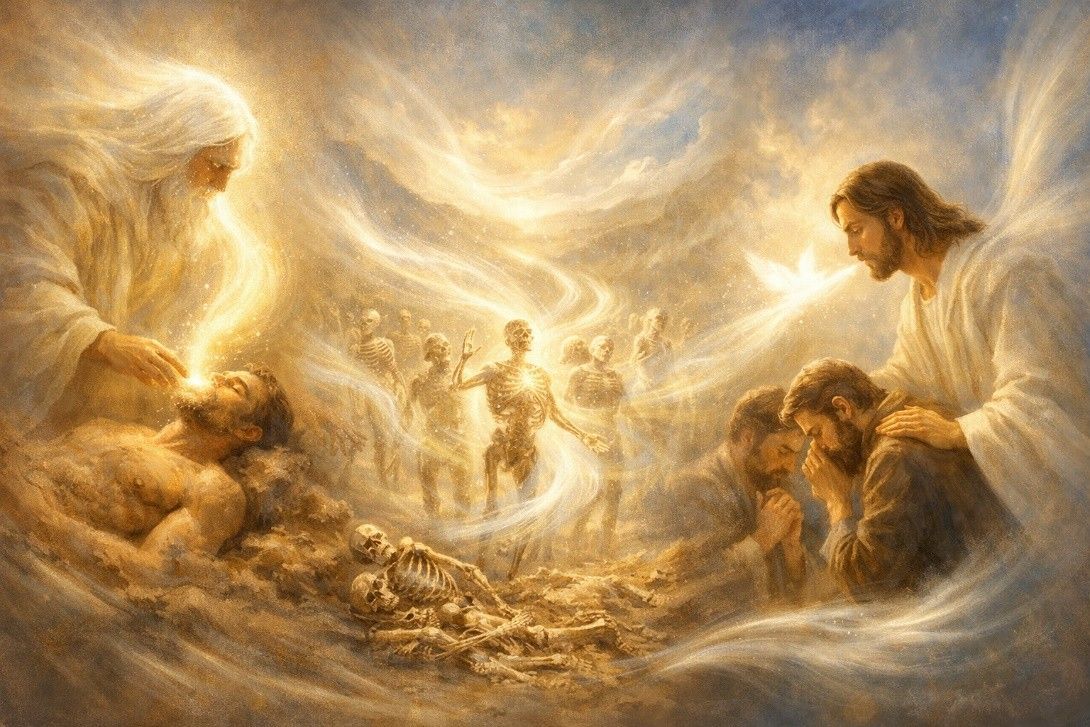
(This Blog is an extract from a Sermon Toby recently preached). In both the Old Testament (Hebrew) and the New Testament (Greek), “breath,” “spirit,” and sometimes even “wind” are closely linked—often by the same word. Some Key Biblical Words are: Hebrew: ruach – breath, wind, spirit Greek: pneuma – breath, wind, spirit Scripture uses physical breath to point to God’s life-giving presence. Breath = Life from God. In Creation we see that human life begins only when God breathes. Dust alone is lifeless. God’s breath transforms matter into life. This shows that life is received, not self-generated. Genesis 2:7 “The Lord God… breathed into his nostrils the breath of life; and man became a living being.” In Job we see that we have ongoing life and Job understands that every moment of life depends on God’s Spirit continuing to sustain him. Job 33:4: “The Spirit of God has made me, and the breath of the Almighty gives me life.” Job 27:3: “The breath of God is in my nostrils” Isaiah reminds us that God’s breath can give life—or remove it and so we see that God’s breath is powerful - it creates, sustains, judge or humble. Isaiah 40:7 “The grass withers… when the breath of the Lord blows upon it” Ezekiel 37:1-10 (Valley of Dry Bones) shows that God’s breath does more than animate bodies—it restores a people spiritually. This passage powerfully shows that: - Structure without God’s Spirit is still death. - We cannot live physically without God’s breath, - and we cannot live spiritually without God’s Spirit. Breath in Scripture symbolizes God’s creative power, God’s indwelling presence, God’s sustaining grace, Humanity’s complete dependence on Him. When the Bible speaks of breath leaving and returning to God, it is not poetic exaggeration—it is a declaration that life itself belongs to Him. Just as the Old Testament uses ruach (breath/spirit), the New Testament uses pneuma, carrying the same meaning. Jesus and the Breath of New Creation J ohn 20:22, “And when He had said this, He breathed on them, and said to them, ‘Receive the Holy Spirit.” This moment with Jesus and the Disciples is intentional and powerful and it echoes Genesis 2:7, which signals a new creation. Just as Adam became alive through God’s breath, believers receive new spiritual life through Christ’s Spirit. At Pentecost, we see Breath as Power. Acts 2:2 “Suddenly a sound like the blowing of a violent wind came from heaven…” Wind = breath = Spirit. The Church is not born through human effort, but through God’s breath filling His people. It is the Spirit who gives life. Romans 8:10–11 “The Spirit gives life… He who raised Christ from the dead will also give life to your mortal bodies.” Breath and New Life 2 Corinthians 5:17 “If anyone is in Christ, he is a new creation.” New creation requires new breath, so as the Holy Spirit comes to live within the believer, we are new creations in Jesus. From the first page of Scripture to the birth of the Church, God reveals a profound truth: life begins, continues, and is restored by His breath. When God formed humanity from dust, He did not simply create a body—He breathed His life into it. That same divine breath reappears throughout Scripture, reviving dry bones, sustaining the faithful, and ultimately breathing new life into believers through Jesus Christ. When Jesus breathed on His disciples and said, “Receive the Holy Spirit,” He was declaring the beginning of a new humanity—people no longer animated merely by physical breath, but by the Spirit of God Himself. Without God’s breath, bodies are lifeless. Without God’s Spirit, souls are barren. But when His Spirit fills us, we move from survival to true life. The Christian life is not about striving harder—it is about remaining filled with the breath of God. How does this apply to a Christian’s Spiritual Life Today? 1. Dependence, Not Self-Sufficiency . Every breath reminds us: We are not self-made. Spiritual life cannot be manufactured. We must receive, not perform. John 15:5 “Apart from Me you can do nothing.” 2. Prayer as Spiritual Breathing. Prayer becomes more than words—it is inhaling God’s presence and exhaling trust. Inhale: receiving the Spirit’s guidance Exhale: surrender, repentance, praise 3. The Holy Spirit as Daily Sustainer. The Spirit is not only for salvation moments but for: Wisdom, Comfort, Conviction, Strength to live faithfully. Galatians 5:25 “Since we live by the Spirit, let us keep in step with the Spirit.” 4. Hope for Dry Places. Ezekiel’s vision reminds believers: God specializes in reviving what seems dead. Spiritual dryness is not final. God’s breath can restore joy, faith, and purpose. As long as the breath of God is in us, life—true life—is possible. As Breath is God. He breathed within us to give us life and life in abundance. What are you doing with that breathe… are you praising and glorifying Him with it or not? Blessings Toby Dr Marishjean Paton Dr.Div PhD Melqowsh Ministries and Melqowsh Bible College Our thanks to Toby for this month’s Blog contribution If you were blessed by this article, please do share it with others

What does ‘ Loyalty ’ mean to you? Has it, over your lifetime, changed in meaning or even how you now live within your understanding of the word? It is my opinion that the true meaning of ‘Loyalty’ is a word that is ‘going out of fashion’. We no longer seem to be loyal to anything - other than ourselves, our own needs and desires. Even within marriage loyalty to each other seems to have diminished. Loyalty among friends seems to now rely on ‘whether you are doing what meets my needs’. Many shops and supermarkets have ‘Loyalty Schemes’, but they want us to be loyal to them so that they can continue to make a profit and keep trading, all the while it’s disguised as their ‘rewarding loyal customers’. I feel that I have become quite cynical about loyalty. But is it because it’s been so watered-down that we no longer understand ‘Loyalty’. Or have I become caught up in the ways of the world? How about you? But more important than our loyalty to each other, how is it with your relationship with God? Has the world’s understanding of loyalty affected your understanding of what being loyal to God looks like? The Bible is quite clear that loyalty is one of God’s attributes. God remains loyal (faithful) to us, so there is an expectation that we should remain loyal to God. The loyalty we express should be a reflection of God’s loyalty to us. What does it mean to be loyal as a Christian? The website GotQuestions.org is quite helpful. “The word loyalty brings to mind a powerful sense of belonging and solidarity. With it comes the idea of wholehearted fidelity coupled with unswerving devotion and duty. In the Bible, the concept of loyalty is purely relational. This means our whole being is thoroughly committed to someone (Joshua 24:15). Such loyalty is expressed to us in both the divine and human realms as given to us in the first two commandments: “Love the Lord your God with all your heart and with all your soul and with all your mind and with all your strength,” and “Love your neighbour as yourself” (Mark 12:29-31; cf. John 15:13; 1 John 3:16). God established the very essence of loyalty through His covenant relationship with His people: “Know therefore that the LORD your God is God, the faithful God who maintains covenant loyalty with those who love Him and keep His commandments, to a thousand generations” (Deuteronomy 7:9).” https://www.gotquestions.org/Bible-loyalty.html It should therefore stand to reason that if we sow disloyalty, we will reap disloyalty. If we sow loyalty, we will reap loyalty. Not only is God completely loyal to us, and this is expressed through His covenant with us and the promise of never being separated from the love God (Romans 8:38-39), but we see how loyalty has shown itself throughout the Bible. The story of Ruth shows the loyalty of a daughter-in-law to a mother-in-law. Jonathan showed loyalty to David – the loyalty of a friend to a friend. Joseph showed loyalty to his brothers, in spite of what they did to him. Esther showed loyalty to her Nation Moses showed loyalty to the people of Israel – even when they turned against him. Lydia showed loyalty to Paul and Timothy by being a good host to them. Timothy and Paul remained loyal to each other in Ministry Luke remained loyal to Paul as he served Paul Paul speaks of his ‘loyal companion’ in requesting that person helps the women who laboured with him in the Gospel. Daniel remained loyal to his God, even when it meant persecution and possible death. And then there is the ultimate demonstration of loyalty – that of Jesus showing loyalty not just to us, but to His Father too. GotQuestions.Org continues “As Jesus’ disciples, we demonstrate our loyalty and self-sacrificing allegiance to Him by following His command: “If anyone would come after Me, he must deny himself and take up his cross and follow Me” (Mark 8:34). But even when we fail to be completely loyal and steadfast to Him, we have His assurance that He will be loyal to us: “And surely I am with you always, even to the very end of the age” (Matthew 28:20b).” As I’ve been seeking God for 2026 in these past few weeks, the word ‘ LOYALTY ’ keeps coming back to me. I have such a deep sense that God is asking us to consider what that word means to us and how we are going to pursue loyalty, not just to each other, but to God. So I leave you, at the start of 2026, to consider this:- • What does loyalty mean to you? Do you receive it from the people around you? Do you show it to those in your life? • How loyal are you to God? How is your relationship with Him going? Can you echo what Psalm 119:33-34 says - “ 33 Teach me, Lord, the way of your decrees, that I may follow it to the end. 34 Give me understanding, so that I may keep your law and obey it with all my heart . ” Loyalty is following God’s ways and being obedient to Him. Being loyal to God also means loving Him with all of our being, living for Him alone, seeking His Face and bringing praise and adoration to Him. Our gaze should be fixed on God and we will be transformed into His likeness. We need to, every day, study the Scriptures to build ourselves up in the faith, pray and where possible pray in the Spirit so that we will be guided into the truth, keep ourselves in God’s love and staying close to Him, receive mercy from Jesus and show mercy to others. Then we will become more like Him in every part of our lives, especially in the area of loyalty. May we remain loyal to God and to each other throughout 2026. Let us allow Holy Spirit to teach us afresh about the meaning of Godly loyalty. And may our prayer this year be: ' God, I invite your searching gaze into my heart. Examine me through and through; find out everything that may be hidden within me. Put me to the test and sift through all my anxious cares. See if there is any path of pain I’m walking on, and lead me back to your glorious, everlasting way— the path that brings me back to you.' Psalms 139:23-24 [TPT] Have an amazing 2026. Be blessed Jean If you were blessed by this article, please do share it with others

Recently I read a Bible passage and in it God highlighted something to me which stirred me and led me to write this Blog. The Lord had been speaking to me about whether we are ‘ Gold ’ Christians or ‘ Bronze ’ Christians. So, I did a tiny bit of research, and discovered that Gold is a pure metal and is hard to mine and expensive to refine. Did you know that the visors on Astronaut’s space helmets are coated with a layer of Gold – thin enough for the astronaut to see through, but thick enough to reflect sunlight? Gold and silver do not require another metal in an alloy to prevent rust/oxidization. Gold is a very soft and malleable metal. It is also very unreactive, so it resists corrosion and stays shiny. Gold is dense and so feels heavy when you hold it. Bronze on the other hand is an alloy (a mixture of two elements where at least one element is a metal) of tin (usually 12%) and copper (usually 88%). Bronze was the first alloy to be made by humans, around 6000 years ago. ( Remember the Bronze Serpent – Numbers 21:6-9 ). When you shine Bronze, you can bring it up to look like Gold, but eventually you will wear it away. Polishing etc can produce a bright reflective surface that appears ‘golden’ at a glance. Gold plating is sometimes put over bronze objects. Jewellery – because of the high copper content of bronze, jewellery will tarnish and develop the green patina (green ring). This occurs because copper reacts to moisture and air from the body and the environment which causes oxidation. Bronze can be mistaken for gold under many realistic conditions. The two metals share some visual similarities, but do differ in colour, lustre, weight (being lighter than Gold), corrosion and physical properties. You can tell a bronze object when you put it against a gold object. This got me thinking about our own lives as Christians. Are we, and is the Church, a Gold or Bronze people? When we first accepted Jesus as our Lord and Saviour, we got the whole download from Heaven – we were refined into the finest Gold. But I wonder how many of us can take a good, hard, honest look at ourselves and see where we have become ‘Bronze’ Christians – where we’ve been corrupted by the world and are happy to stay that way. Where we want to live with an ‘alloy’ of the Kingdom and the world. Where we have substituted the Gold in us and been quite happy with being Bronze. We remember in the Old Testament that the finest Gold made so many of the items in Soloman’s temple. But after Israel was invaded and the Egyptians took all the gold items, King Rehoboam replaced the Gold with Bronze. He substituted the best for a second-best. I see the Gold representing the purest and finest of Heaven – and that’s what we actually have. But I see the Bronze representing an alloy of Heaven and the world. And the thing with Bronze is that it is difficult to separate, and you will never get it back to the original forms of Tin and Copper. I think many of us are still so attracted to the things of the world that we have mixed the world and the Kingdom and are parading it as the finest that Heaven has to offer us. We shine it up, and hope no one will see the difference. But we have to remember that no matter how much we try and shine up Bronze, it will never be Gold. No matter how much we try and convince ourselves that our ‘bronze life’ is ok, it will never be the true representation of the Kingdom of Heaven that God wants us to display. Have we kept the appearance (Bronze) that we are amazing Christians following God and doing His will, when actually we’re not because we still live sinful lives deliberately? Have we tried to keep hold of the things of the world we like and twisted the truth of Scripture to justify our decision and lifestyle? If we are doing that we are saying, in effect, that the Kingdom is NOT ENOUGH, and that we have to ADD TO IT . But eventually the truth will out and we will be exposed. Because just as Bronze Jewellery being passed off as Gold Jewellery tarnishes and develops the green patina (and I’ve had many jewellery items that have done that to me, and it’s caused problems on my skin), so our pretending to be pure Gold when we’re not will eventually be exposed. Something to ponder – is your life pure and can others see the purity of that life in you? Do you have the kind of relationship with God where you allow Him to change you more into His image? Do you have a lifestyle that cannot be corroded by the world? And a character that makes you unique and others will see Jesus in you? Are you holy and set apart to do the will of the Father? Has your heart been purified and cleansed from sin so that other will know that they have been in the presence of Jesus when they come into your company? Are you a Gold Christian? The way I see it is that if we want to become ‘Gold’ Christians, then we need to destroy the ‘Bronze’ in us and start afresh, by confessing our allegiance with the world, by repenting of wanting the ‘best of both worlds’, and by receiving Jesus’ forgiveness and allowing Holy Spirit to make us into new Creations, ‘Gold’ people. It’s our choice! As we approach the Christmas season, we think of the Christmas Story that is traditionally told at this time of the year. The Wise Men brought Jesus gifts of Gold, Frankincense and Myrrh. What do we bring to Jesus – a life of Gold, or a life of Bronze? Surely God is worthy of our lives of Gold being presented to Him and shown to the world. May this Christmas be a blessing to one and all. Be blessed Jean If you were blessed by this article, please do share it with others